
The fierce and intense Rugby’s Greatest Rivalry series 2026 has concluded, and having won two of the three tests in South Africa, it was impossible for the Boks to lose the Baltimore instalment. At worst, the result could have been a draw, but the resilient Boks prevailed and showed why they are world champions. Rugby is growing and increasingly becoming a popular sport worldwide, including in the United Stated, host of the 2031 Rugby World Cup. The Baltimore meeting has given impetus to a sporting code that has thus far remained niche, compared to American football and basketball. Having two of the world’s top rugby nations compete in the United States attracted attention and exposed more Americans to the unifying power of sport. In South Africa, rugby is more than sports. It is culturally and socially significant and brings together various communities with a passion for sport, and has played a pivotal role in fostering a sense of national pride and unity among South Africans. The Mandela era 1995 Rugby World Cup victory is the clearest example yet, of how sport can break down barriers, build bridges, unite a nation and create lasting friendships across nations and cultures.
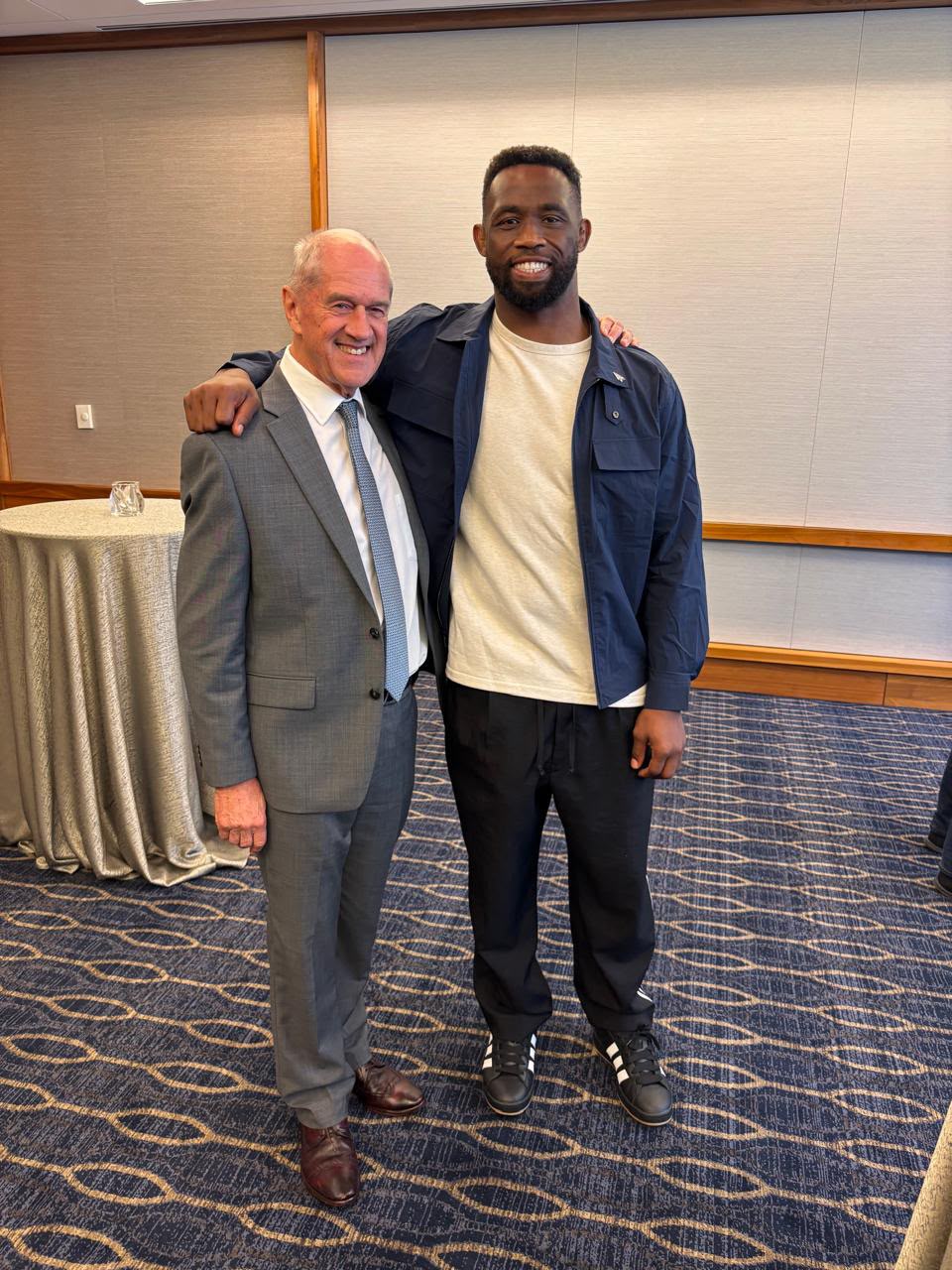
It was no surprise that South Africa’s Ambassador to the United States, partnering with the South African Rugby Union President Mark Alexander, were not going to let the Baltimore moment slide. They seized the opportunity to use sports diplomacy to advance South Africa’s broader political and economic relationship with the United States. Their excellent teams quickly identified opportunities to generate buzz and organise build-up events in the lead up to match day, creating awareness, visibility and excitement among Americans inside and outside the Capital Beltway. One of those was a standing room only high profile welcome reception at the South African Embassy, located on the stretch of Massachusetts avenue known as Embassy Row, right down the road from the Naval Observatory, the official residence of US Vice President JD Vance. The green and gold branding adorning the Embassy building was impossible to miss.
The SARU and Embassy teams rallied the troops and reached out to South African and American businesses, American politicians and Administration officials, media, sports personalities and expats, to leverage the historic presence of the Springboks in the greater Washington DC metropolitan area. South African exports were on full display in the United States prior to, during and after the test that the Boks won convincingly; from rugby to a proper braai to our golf and rugby legends Ernie Els, Naas Botha and John Smith, from traditional boerewors rolls to the iconic Boschendal wine to Nandos chicken wings and some Castle lager to wash it all down. The business response and eagerness to support brand South Africa was overwhelming, again displaying the indomitable gees in overcoming hurdles, taking a leaf out of Coach Rassie’s book.
The footprints of Ambassador Meyer are clearly visible in this story. Vintage Roelf, ever the negotiator, inclusivity and broad consultation in building relations are the hallmarks of his approach and bode well for the green shoots already visible in the relationship just two months since he presented his credentials to officially start engagements with the Trump Administration. The embassy team will no doubt build on these steps and ensure that engagements are tailored to reflect a whole of society approach in restoring an important relationship with a significant global economic power. In multiple public statements, the Ambassador has staked his success on promoting job creating investment and growth into South Africa. And it is exciting to see business already engaged and playing a leading role in that effort.
Certainly a lot of work still lies ahead to reverse the political and especially economic erosion and avoidable harm to what could otherwise be a robust, mutually beneficial bilateral relationship. South Africa, like many countries across the globe, has had a lot of incoming policy changes and administrative actions from the Trump Administration on the trade and political fronts in the past two years. The topics on the table may look complex but they are in fact not intractable. Our leaders can steer clear of unhelpful rhetoric, lower the temperature and give the hardworking mission teams the space they need to converge divergent views, reduce friction and align foreign policy positions. Maryland’s Commerce Secretary Harry Coker Jr, speaking at the reception, correctly recognised the nature of policy evolution and the inevitable political differences, but that relationships need not be limited to governments. People can collaborate, businesses can invest and academic institutions can promote research exchanges, echoing the sentiments expressed earlier by Mark Alexander on the shared commitment to rugby and its development in the United States.
To see South Africa both at work and at play in Washington and Baltimore was impressive, but that in itself is not a talisman to get the relationship on the downside of the mountain. However, judging by the success of the diplomatic activities associated with the visit of the Springboks, and indeed the national positive reaction following the appointment of Roelf Meyer as Ambassador to the United States, South Africans believe that President Ramaphosa has finally found the right combination to the lock.
Ngwepe is a Director of ITI and former Washington DC based South African diplomat